

Fushimi Inari, Arashiyama Bamboo, and the Urban Energy of Osaka
Some journeys don’t feel like journeys at all. You don’t mark a beginning, and you don’t notice an ending. Instead, your pace changes first. Then your attention. Only later do you realise you’ve moved into a different way of noticing what’s around you.
Kyoto and Osaka sit close enough that this shift happens quietly. One moment you are walking without thinking about where you’re headed. The next, you’re moving faster than expected, carried along by sound and light. Fushimi Inari, Arashiyama, and Osaka’s streets are often described separately, but they tend to blur together once you’ve spent time among them.
A Path That Keeps Going
At Fushimi Inari, the idea of arrival fades quickly. The torii gates continue longer than you anticipate, bending gently as the path rises. There is no point where you feel you’ve reached what you came for. The walking itself becomes the experience.
The repetition is steady but not mechanical. Gates differ slightly. Light slips through at uneven angles. Sound thins, then returns. You move forward without checking distance or time.
Eventually, you stop asking how far it goes.
Quiet That Isn’t Enforced
Despite how well known the site is, the atmosphere remains restrained. People adjust naturally. Voices soften. Pauses happen without coordination.
There is no instruction telling you how to behave. The space takes care of that on its own. You bow briefly, step aside, continue upward. Nothing needs emphasis.
Meaning forms slowly, without declaration.
Movement Without Resetting
Travel between places doesn’t break this rhythm. The Tokyo to Kyoto bullet train compresses distance so smoothly that your internal pace barely changes. You leave one environment and arrive in another without needing to recalibrate.
Inside the carriage, time loosens. There is nothing to prepare for. Arrival arrives on its own.
Movement supports continuity rather than interrupting it.
Attention Shifts Upward
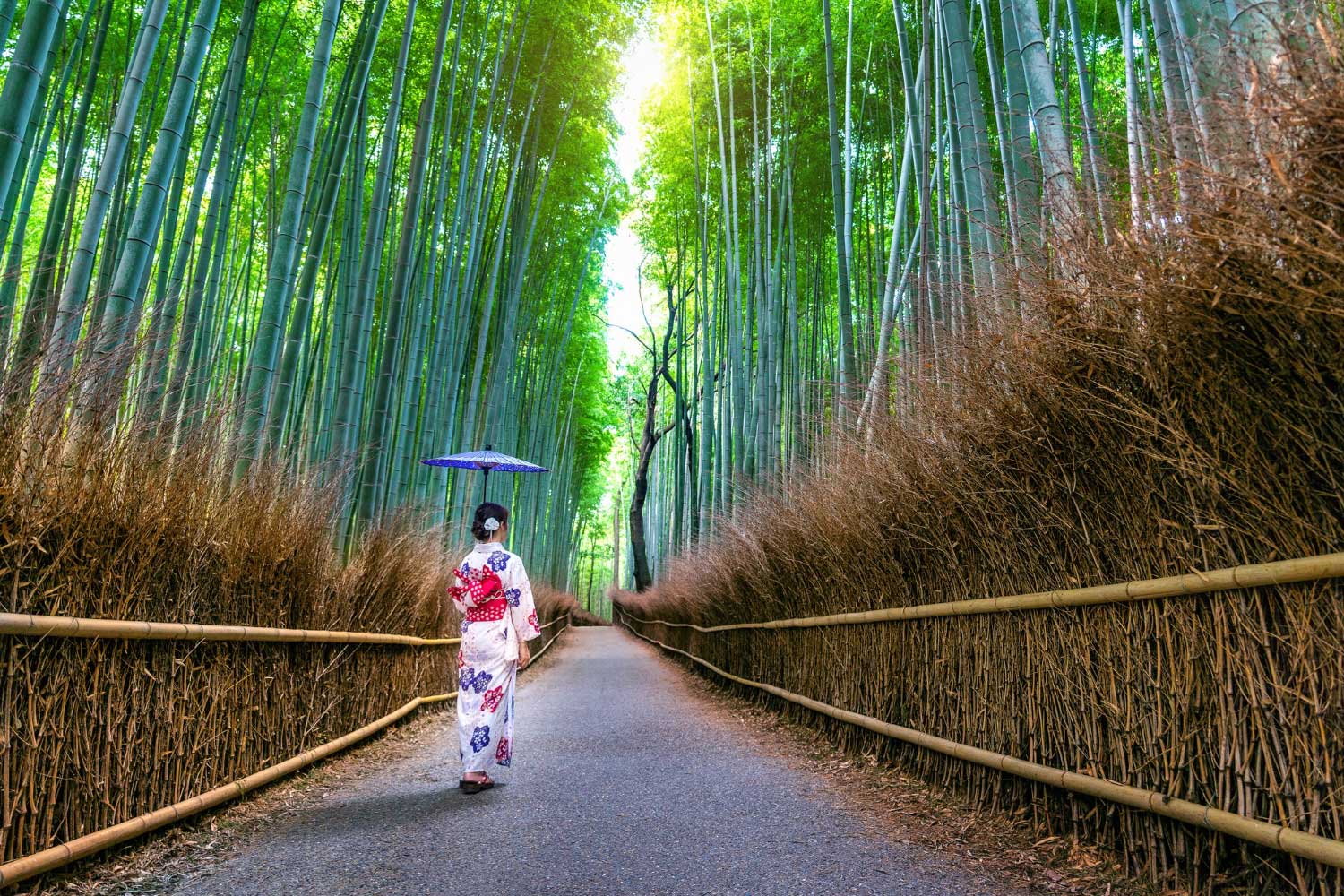
Arashiyama introduces a different sensation almost immediately. The bamboo does not pull you forward; it draws your gaze upward. Tall, narrow, and close together, the stalks limit what you can see beyond them.
Sound changes here. Wind becomes more noticeable. Footsteps feel quieter. You slow down, not because you intend to, but because the space narrows your movement.
You stand differently without thinking about it.
A Brief Detour That Reframes Everything
A detour through Tokyo changes how both Kyoto and Osaka register afterward. The city does not pause or soften on entry. It moves continuously, layering sound, motion, and light without apology. Yet within that density, order holds. Trains arrive precisely. Streets flow without collision. After Tokyo, Kyoto’s restraint feels even more intentional, and Osaka’s energy feels more conversational than overwhelming. The detour does not compete with what comes before or after — it sharpens contrast quietly, recalibrating attention before you return to quieter paths and louder streets with a clearer sense of scale.
Speed That Stays in the Background
Travel reinforces this ease. Taking the train from Tokyo to Osaka highlights how speed functions here — present, efficient, but not foregrounded.
You arrive ready to keep moving. The journey does not announce itself as an achievement.
Infrastructure does its work quietly.
Osaka Doesn’t Ease You In
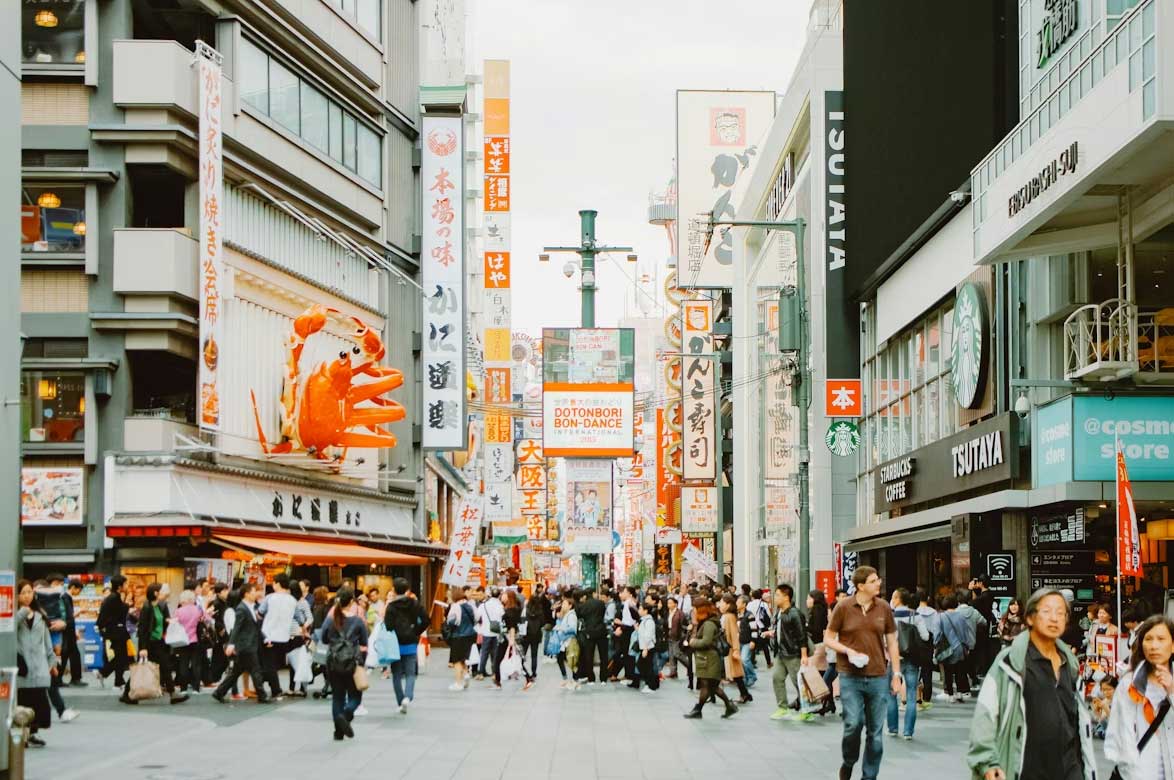
Osaka feels immediate. Sound thickens. Light reflects off signs and glass. Streets fill quickly.
Yet the energy is not chaotic. It’s social. Food stalls, conversations, and movement overlap in a way that feels practiced. People move fast, but with awareness.
The city does not ask you to slow down. It asks you to participate.
Life in Plain Sight
What stands out in Osaka is how little is hidden. Eating happens openly. Laughter spills into the street. Private moments appear briefly, then dissolve back into the crowd.
There is no effort to curate atmosphere. The city trusts its own momentum.
You are not watching life happen. You are moving inside it.
Letting the Landscape Loosen Again
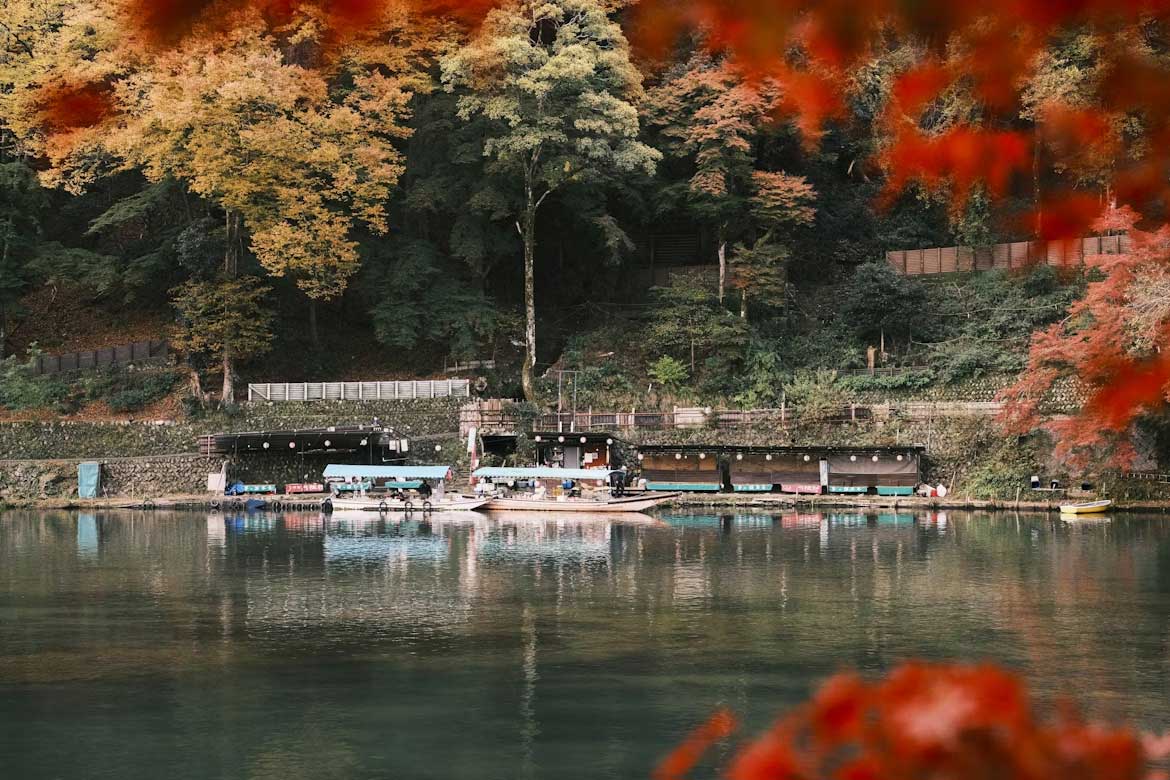
Beyond the grove, the environment relaxes. Paths widen. The river reintroduces distance. The vertical intensity fades into something more open.
People linger. Sitting feels complete. Walking feels optional rather than required.
The contrast isn’t dramatic. It feels like exhaling.
Not Opposites, Just Different Pressures
Kyoto and Osaka are often framed as contrasts, but the experience feels less binary. One narrows attention. The other disperses it. Neither cancels the other out.
Fushimi Inari and Arashiyama ask you to notice repetition and scale. Osaka asks you to notice proximity and flow. Each adjusts you in a different direction.
The movement between them feels continuous.
Memory Without a Highlight
Later, what returns is not a single image or moment. It’s the feeling of adjusting — slowing beneath the gates, lifting your gaze among bamboo, matching the pace of a crowded street without effort.
These shifts don’t organise themselves into a narrative. They sit alongside one another, unresolved.
You remember rhythm more than place.
What Remains Unsettled
Fushimi Inari, Arashiyama, and Osaka do not compete for attention or meaning. They offer different conditions for being present.
What stays with you is not contrast, but ease — the sense that nothing needed to be concluded, understood, or completed.
Japan does not insist on resolution. It allows experiences to remain slightly unfinished, and invites you to carry that openness with you as you move on.