

Imperial Echoes:
From the Reichstag Dome to the Grandeur of Wilanów Palace
Some buildings feel less like monuments and more like pauses in the city. You come upon them not as conclusions, but as surfaces that have outlasted several versions of what once surrounded them. In Berlin and Warsaw, traces of empire remain visible, though not in a single, fixed form.
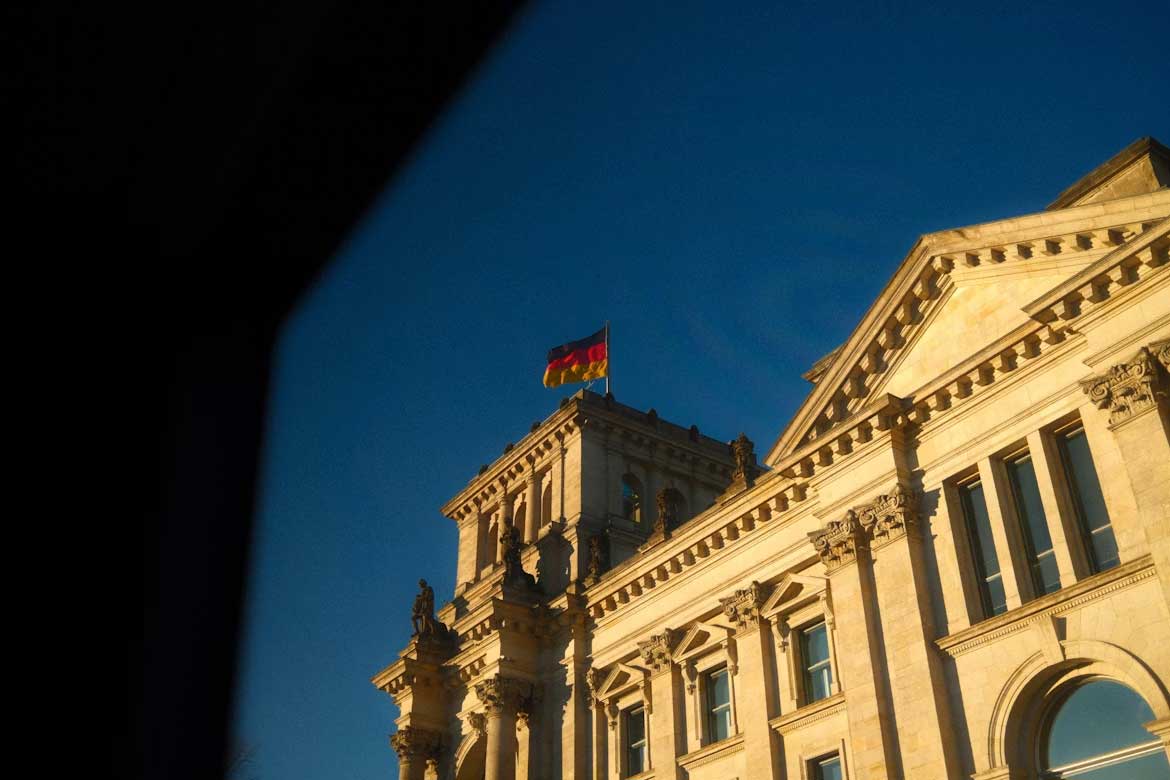
The Reichstag stands near the Spree, steady and pale. Wilanów rests further from Warsaw’s centre, surrounded by gardens that seem to hold their breath between seasons. One lifts glass into the sky. The other stretches plaster and brick across open ground.
A Circle of Glass Above Old Stone
The Reichstag’s stone façade does not compete with the dome that crowns it. The walls are restrained, marked by columns and inscriptions that blend into the city’s broader rhythm. It is the glass dome that draws the eye — not because it is ornate, but because it is exposed.
Inside, a ramp curves slowly upward. You move in a gradual spiral, watching the city rearrange itself through transparent panels. Clouds slide across the surface overhead and then appear again in reflection. Nothing remains fixed for long.
Arriving in Berlin on the Berlin to Prague train, the city assembles itself through windows — warehouses, apartment blocks, fragments of older architecture rising between newer structures. The Reichstag belongs to that layering. It does not interrupt it.
From the top, the view does not feel triumphant. It feels observational. The dome gathers light and returns it, then lets it pass.
A Palace Beyond the Rush
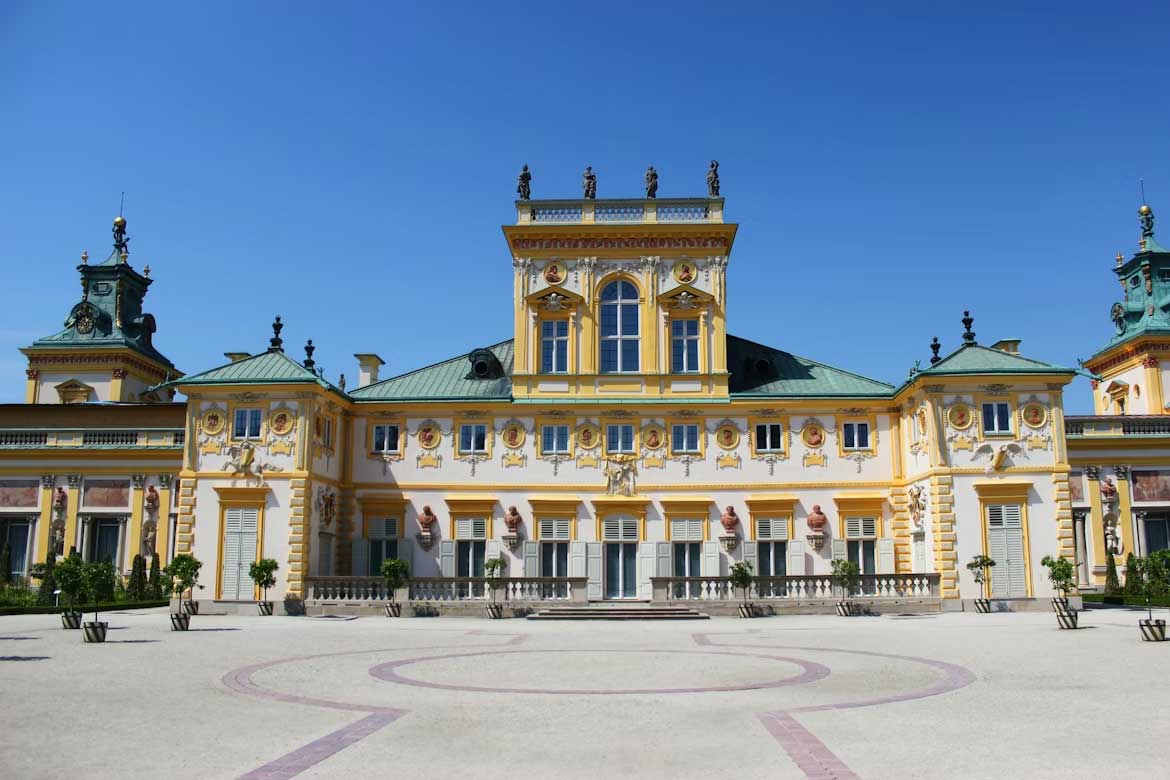
Wilanów sits in a different register. The palace does not rise sharply; it extends. Its façade carries warm colour that shifts with the weather — pale in direct sun, deeper in damp air. The building meets its gardens in a long, horizontal line.
Paths cut through trimmed hedges and open lawns. Gravel crunches softly underfoot. Statues stand at measured intervals, their outlines softened by distance and light.
The journey westward on the Warsaw to Berlin train passes through wide stretches of countryside where fields blur gently into forest. The capitals do not feel opposed; they feel connected by repetition of land and sky.
In Wilanów’s grounds, proportion seems more important than scale. The palace does not dominate its setting. It rests within it.
Transparency and Surface
Glass at the Reichstag reveals its framework. You can trace the beams and joints, the structure exposed rather than concealed. At Wilanów, ornament sits on the surface — stucco figures, decorative panels, small flourishes that catch light for a moment before fading back into shadow.
Both buildings carry marks of interruption. War, restoration, reinterpretation. Yet neither presents itself as a symbol of rupture. They continue quietly, adapted rather than erased.
Rain alters each in subtle ways. Glass blurs into reflection. Plaster darkens slightly. Gravel deepens in tone. The change feels temporary, almost expected.
Between Two Histories
The movement between Berlin and Warsaw does not announce itself through landscape. Fields and forests pass in steady rhythm. Stations appear briefly, then withdraw.
In memory, the spiral inside the dome aligns faintly with a curved garden path at Wilanów. Reflection in glass echoes reflection in a shallow pool. The connection feels atmospheric, not deliberate.
Empire lingers here not in spectacle, but in alignment — in symmetry, in balance, in the decision to build upward or outward.
As Evening Gathers
In Berlin, the dome glows from within after dusk, a quiet circle of light above darker stone. In Warsaw, Wilanów’s façade warms briefly before merging into shadow.
Later, what remains is not a narrative of power, but of form. A curve of glass against moving cloud. A measured palace against trimmed hedges.
The buildings continue to hold their positions. The trains continue to cross the plains between them. History does not conclude in either place. It rests in outline, shifting slightly as light changes, never entirely fixed, never fully gone.