

Makkah, Madinah, and Modernity:
A First-Timer’s Guide to the High-Speed Pilgrimage
It begins in a station that feels too new for the weight it carries.
The floor reflects light in wide, pale bands. Luggage wheels trace soft arcs. Conversations stay low. Nothing about the building suggests centuries of longing, and yet that is what fills it. People sit facing the platform without quite looking at it.
Waiting Under a Wide Roof
Above, screens glow. The name Haramain appears in clear lettering, detached, practical. The word feels contemporary. The intention behind it does not.
The roof stretches higher than expected. Air moves easily through the space. A child presses their forehead briefly to the glass wall before being pulled back gently. A man closes his eyes without sleeping.
When the train arrives, it does not announce itself loudly. It slides forward. Doors open. The movement is orderly but not rigid. There is no rush. No raised voices. Only adjustment.
Inside, the temperature drops slightly. Seats align in quiet repetition. The window becomes a frame before anything has yet appeared within it.
Sand in Long Lines
The desert does not perform for the passing train. It lies flat, then rises slightly, then flattens again. The colour shifts between pale gold and muted brown depending on the angle of light.
Speed registers only in the way the horizon refuses to stay still. There are moments when nothing seems to move at all, though the carriage hum suggests otherwise.
For someone travelling this route for the first time, the mind holds two timelines at once. The ancient journey imagined. The present one unfolding without dust, without weeks of distance.
Neither cancels the other.
Makkah Gathers
The city appears gradually, then all at once. Buildings cluster tightly. Roads intersect and layer. From the train window, it is only geometry and scale.
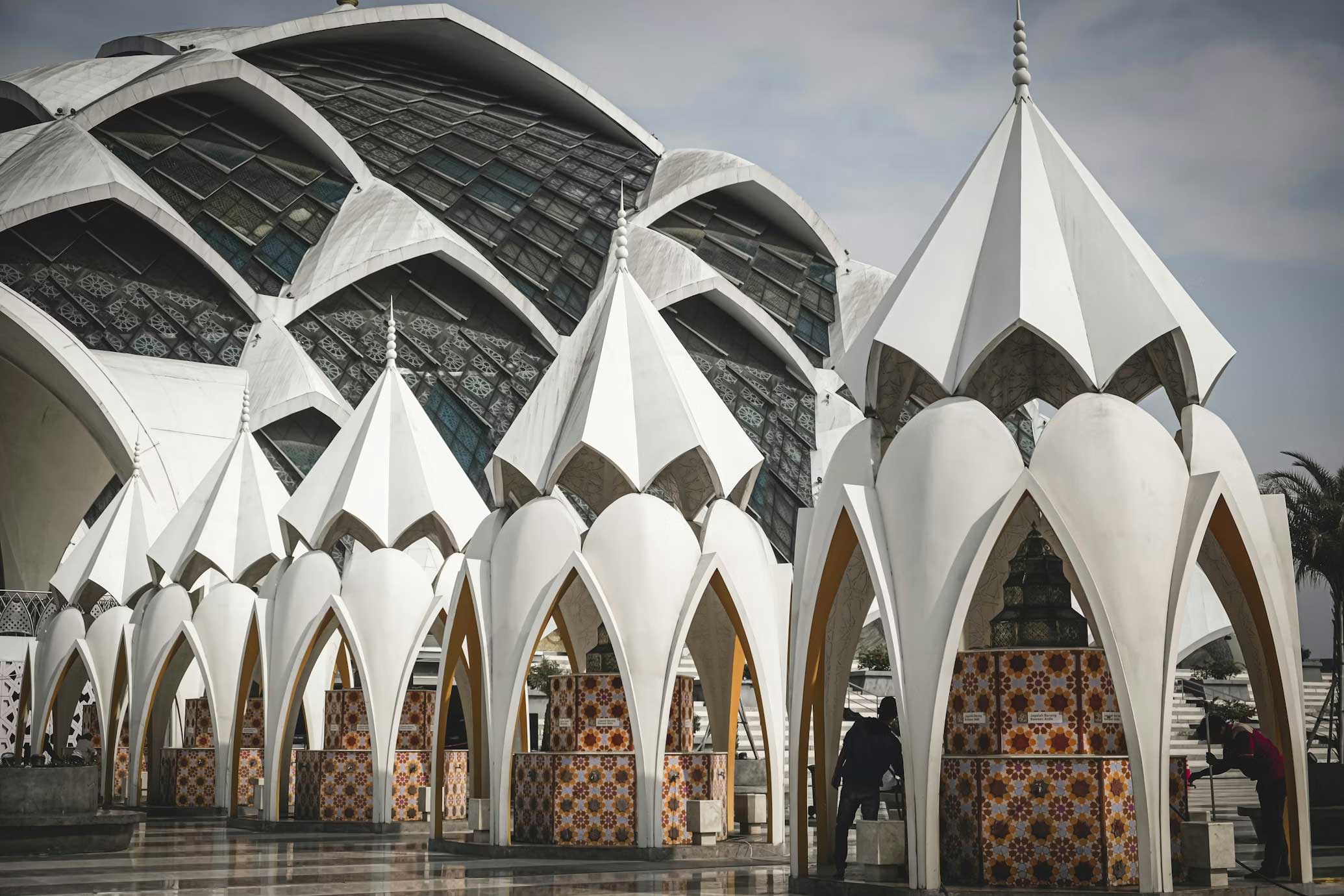
Stepping onto the platform, the modern world reasserts itself — escalators, signage, polished surfaces. Yet not far beyond, marble opens under open sky. Footsteps soften. Sound deepens.
The mosque holds light differently. It reflects upward rather than outward. Time seems to stretch in certain corners, compress in others. The city beyond continues at its own rhythm.
Later, the return to the station feels less surprising. The sequence repeats — platform, carriage, window — though something internal has shifted.
The Space Between
The journey north feels quieter. Evening lowers across the sand, drawing longer shadows that the train cuts through without resistance.
There is no dramatic change in the landscape. Only subtle cooling in colour. A faint dimming along the horizon.
Inside, passengers sit without much movement. Some rest. Some look outward. Some close their eyes as if the motion itself carries them.
Modern travel does not intrude. It fades into background hum.
Madinah Receives
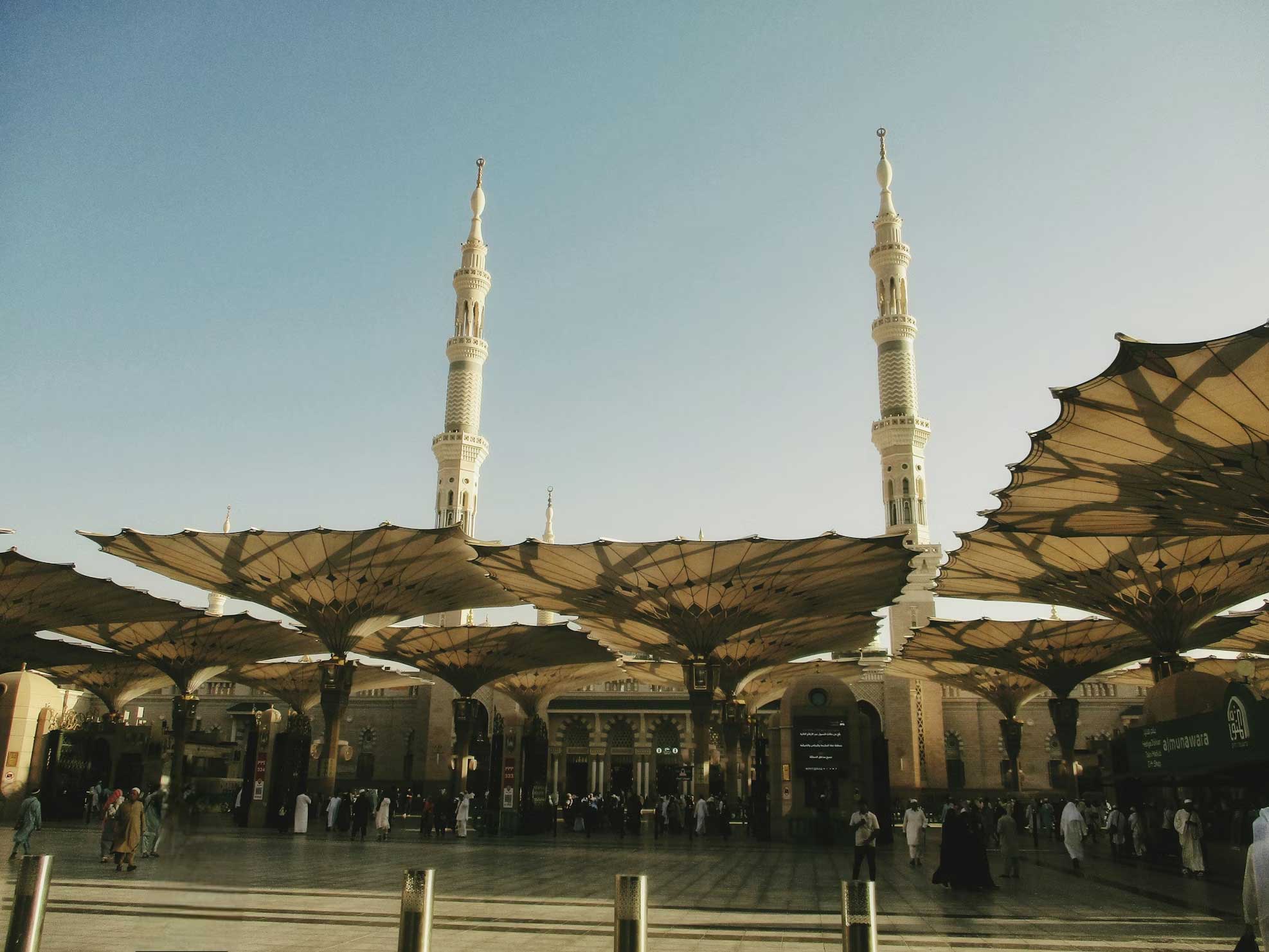
Arrival in Madinah feels wider. The air seems to hold more space. The courtyard opens like a breath taken slowly and released.
Here, the sense of scale shifts again. The railway becomes a small detail in a much older pattern of arrival and departure.
The station exists. The tracks exist. But they do not define the place.
After the Motion
Eventually, there is another platform. Another departure. The same stretch of land passing once more beyond the glass.
Nothing about the train has changed. The seats remain aligned. The announcements remain measured. The desert remains vast and unbroken.
What changes is less visible.
The high-speed line continues to run across the sand. The sacred cities remain where they have always been. Between them, steel shortens distance but does not disturb silence.
And somewhere in that quiet crossing, the first-time traveller begins to understand that modernity here does not replace devotion.
It simply moves alongside it.