

Shadows of Mount Vesuvius and the Roman Colosseum:
A Chronicle of Ancient Power
Italy does not introduce its monuments gently. You turn a corner and stone appears, already weathered, already carrying a history that feels settled rather than displayed. The air is warm even before midday. Traffic moves in loose patterns. Somewhere nearby, something very old is still standing.
The sense of time here does not move forward cleanly. It folds.
Arches Open to Sky
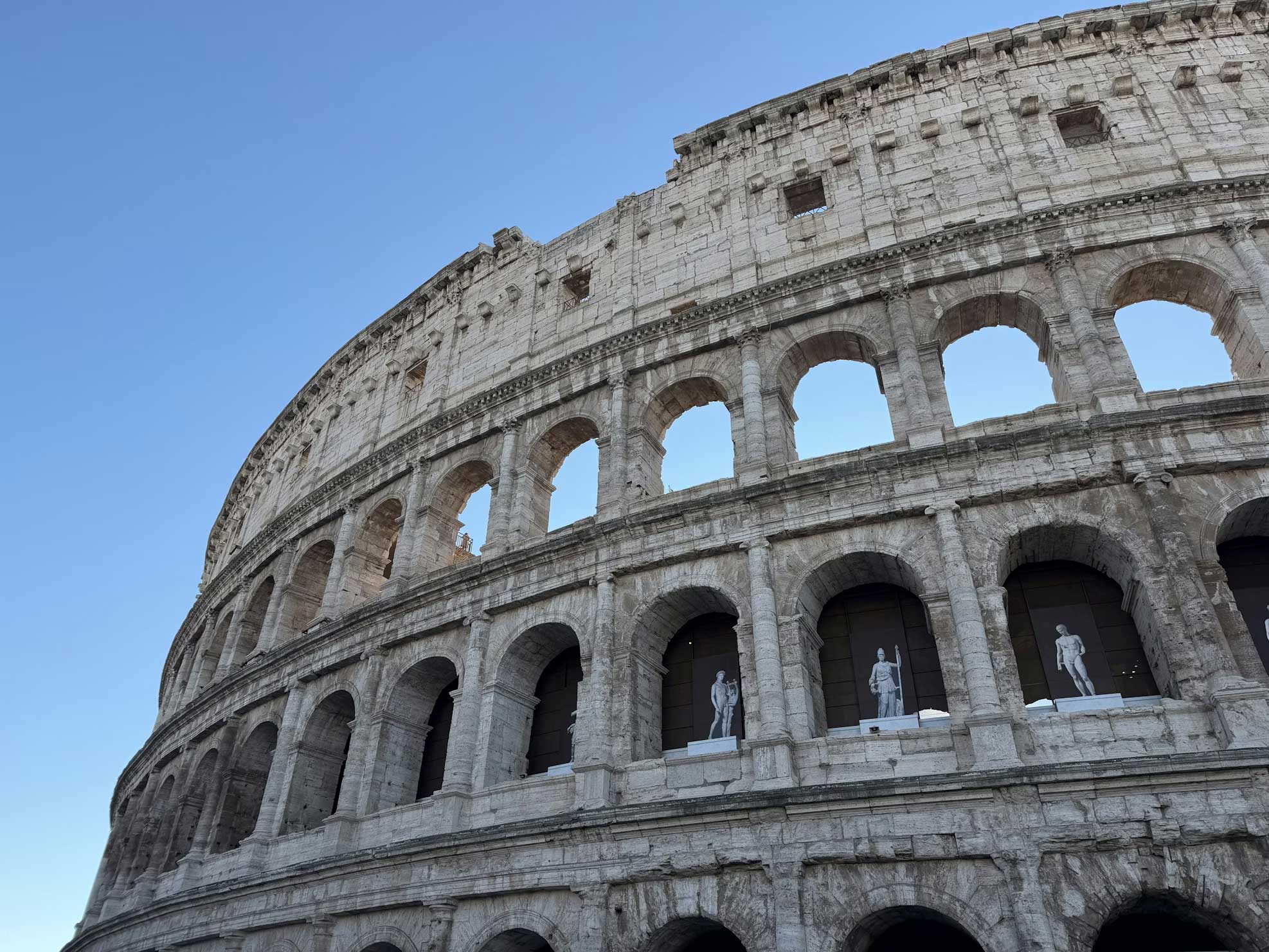
The Colosseum does not feel intact, and that is part of its weight. The interior is exposed. Light falls directly through the open centre where a roof once might have enclosed sound and spectacle. The arches repeat themselves without decoration, without commentary.
You do not approach it in a straight line. You circle it. Stone shifts in colour depending on where you stand. It looks pale from one side, darker from another. The scale is difficult to measure because the structure is both massive and empty.
Later, on the train from Rome to Naples, the city thins in slow increments rather than in a single gesture. Apartment blocks interrupt the view before fields widen unexpectedly. The Colosseum is gone before you fully register its absence.
The countryside south of Rome feels flatter than the city deserves. Olive trees appear in uneven rows. Power lines cut across sky. The motion is steady, not dramatic.
A Shape Against the Horizon
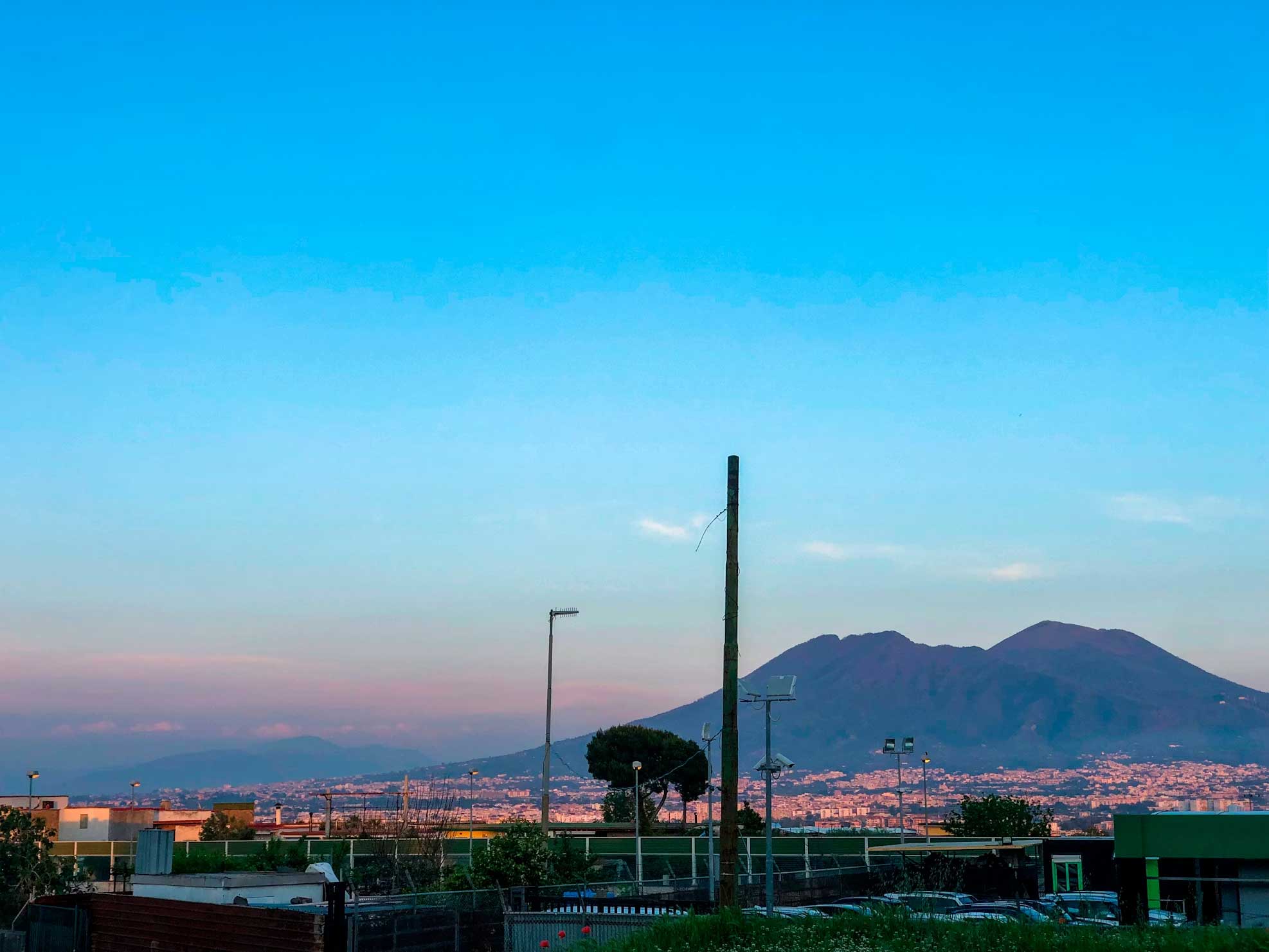
Vesuvius does not rise with theatrical intent. It exists in the background first, almost modestly, until you realise it occupies the entire skyline. Naples gathers beneath it without hesitation — streets layered with sound, balconies leaning outward, laundry shifting in light wind.
Standing near the water, the mountain seems detached from the city’s movement. It does not acknowledge it. Clouds settle near its upper ridge and drift away again. The outline remains.
In Pompeii, stone walls end abruptly. Courtyards face open air. The absence of roofs feels more powerful than any reconstruction. You walk through spaces once interrupted in a single moment and now preserved in fragments.
Far to the north, the train from Venice to Florence moves through flat terrain where reflections linger in irrigation channels before hills begin to gather. Venice dissolves into farmland almost immediately. Florence appears later, measured and proportioned, its dome neither looming nor hidden.
Italy does not transition cleanly from eruption to empire to Renaissance balance. It overlays them.
Heat Held in Surfaces
Afternoon settles unevenly across the peninsula. In Rome, lower arches of the Colosseum darken first while the upper levels remain bright. In Naples, the volcano’s slopes absorb light rather than reflect it. Heat lingers in pavement long after the sun begins to lower.
Nothing here feels resolved. The arena remains open to weather. The mountain remains contained within its own outline. Trains continue to cross the distance between them without pause.
The landscape does not choose which form of power was greater. It holds both — stone shaped by human intention and stone shaped by force — and allows them to remain where they are, under the same shifting sky.
Between Movement and Stillness
What begins to blur over time is not the difference between Rome and Naples, but the sensation of moving between them. The train compresses geography, yet the mind expands it again later. Fields that seemed incidental at the time return unexpectedly in memory — a lone structure in the distance, a stretch of dry earth, a curve in the tracks that shifted the angle of light for only a few seconds. The Colosseum and Vesuvius anchor those recollections, but they do not dominate them. They sit at opposite ends of experience, while the land between continues to unfold in quieter increments. Italy does not present its power in a straight narrative. It reveals it in interruptions — glimpses from a carriage window, sudden shadows against stone, outlines that hold steady while everything else moves.
Where Stone Outlasts Explanation
Long after the journey finishes, what remains is not a conclusion about empire or eruption, but the texture of surfaces. The roughness of ancient blocks beneath your palm. The heat rising from streets in late afternoon. The outline of a mountain that refuses to feel symbolic, even when history insists on it. The trains will keep running their routes north and south, stitching cities together without asking them to reconcile. The Colosseum will continue to open itself to weather. Vesuvius will continue to stand above the bay, neither silent nor loud, simply present. And the space between them — fields, towns, tracks, and shifting light — will keep holding both forms of endurance without needing to decide which one speaks more clearly.