

Viking Legacies:
From the Akershus Fortress to the Ancient Stave Church Motifs
In Norway, history does not feel distant. It sits in the outline of a roof, in the weight of stone beside water. You notice it without trying. A wall rises at the edge of a fjord. A timber façade darkens under rain. The past does not announce itself; it lingers.
From Akershus Fortress in Oslo to the carved surfaces of stave churches scattered through valleys, the materials change — stone to wood — yet the atmosphere holds something consistent. Solidity. Restraint. A certain closeness to landscape.
Walls Beside Cold Water
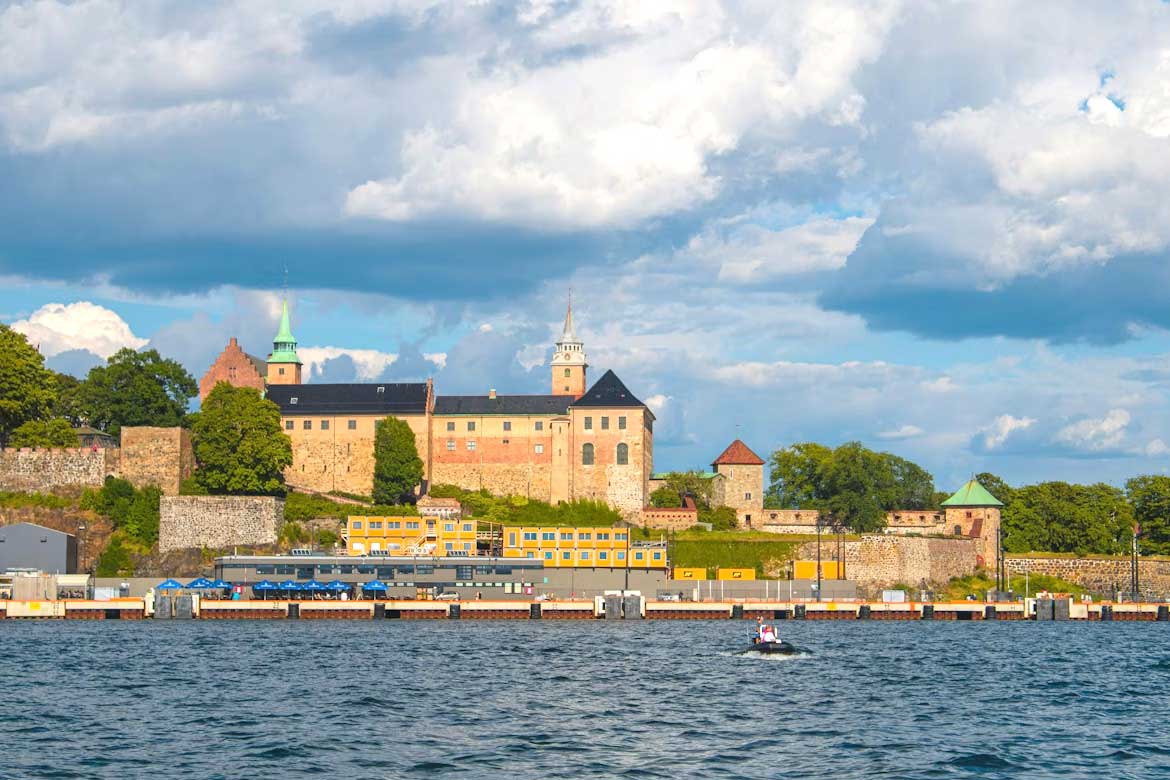
Akershus does not dominate the skyline aggressively. Its towers hold steady near the fjord, pale against shifting cloud. The stone appears thick, almost quiet in its presence. Standing along the outer wall, you feel the wind first. It moves across open ground and over the water without interruption.
The fjord reflects muted light. Ferries cross slowly. The fortress feels less like spectacle and more like pause — a structure built for watchfulness rather than display.
Leaving Oslo on the Bergen to Oslo train in reverse, the city thins quickly. The fortress disappears behind modern buildings, replaced by forest, then open ground. The shift feels gradual, as if stone is giving way to timber and soil in stages.
Inside the carriage, the hum is steady. Outside, lakes appear briefly between trees before vanishing again.
Timber That Carries Pattern
In rural Norway, stave churches rise in darker tones. Their wood is nearly black in places, deepened by years of weather. Roofs stack upward in angled layers, and carved details trace along beams — serpentine lines, animal forms, looping patterns that resist straight edges.
Approaching one on foot, the structure seems smaller than expected. It does not tower over the landscape. It sits within it. Grass grows close to its base. The air feels cooler in its shadow.
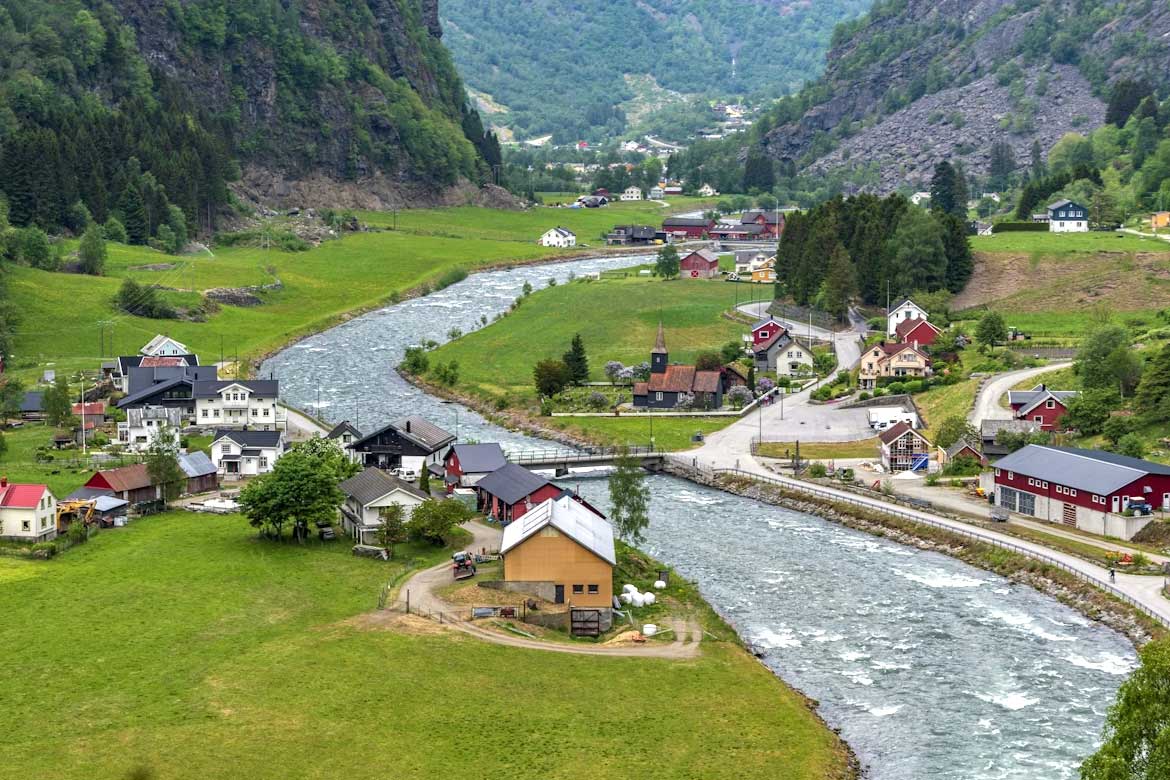
The route through valleys may follow narrow roads or rail lines such as the Flåm railway, where mountains press inward and waterfalls cut white lines down rock faces. The journey narrows the world to slope and sky.
Inside a stave church, light filters in carefully. Dust moves in thin beams. The carvings do not demand explanation. They repeat and fold into themselves, as if drawn from memory rather than design.
Stone Weight, Wooden Grain
Stone and timber respond differently to time. Akershus holds shape through mass. Its walls absorb rain evenly. The stave churches show change in grain and texture — slight warping, subtle shifts in tone.
The fortress suggests defense. The churches suggest shelter. Yet neither feels theatrical. Both rely on proportion rather than excess.
Cloud alters them quietly. On overcast days, the stone of Akershus turns flat and grey. The wood of the churches appears deeper, almost blue-black. In sunlight, edges sharpen briefly before softening again.
Between Fjord and Valley
The movement between Oslo and the western landscapes carries these materials in sequence. Urban stone, then forest, then carved timber in open fields. The transition does not insist on contrast. It unfolds in repetition — lake after lake, ridge after ridge.
From a window seat, the country feels both narrow and expansive. Water cuts into land. Land rises abruptly. The sense of scale remains steady even as scenery changes.
In recollection, the shapes begin to overlap. A tower near the fjord aligns loosely with a layered roof in a valley. The distinction remains, but the separation feels thinner.
As Light Lowers
Toward evening, Akershus reduces to outline against dim water. In rural clearings, stave churches darken until they nearly merge with surrounding trees.
Later, what remains is not a timeline but texture — stone cooled by wind, wood carrying carved lines beneath shadow.
The fortress stays by the fjord. The churches remain among hills and fields. Norway holds both without explanation, letting stone and timber stand as they are, under a sky that shifts slowly and rarely declares its change.