

The Bukchon Hanok Shingles and the Torii Gates of Kyoto:
Aesthetic Echoes of the East
Where the Rooflines Sit Close to the Hills
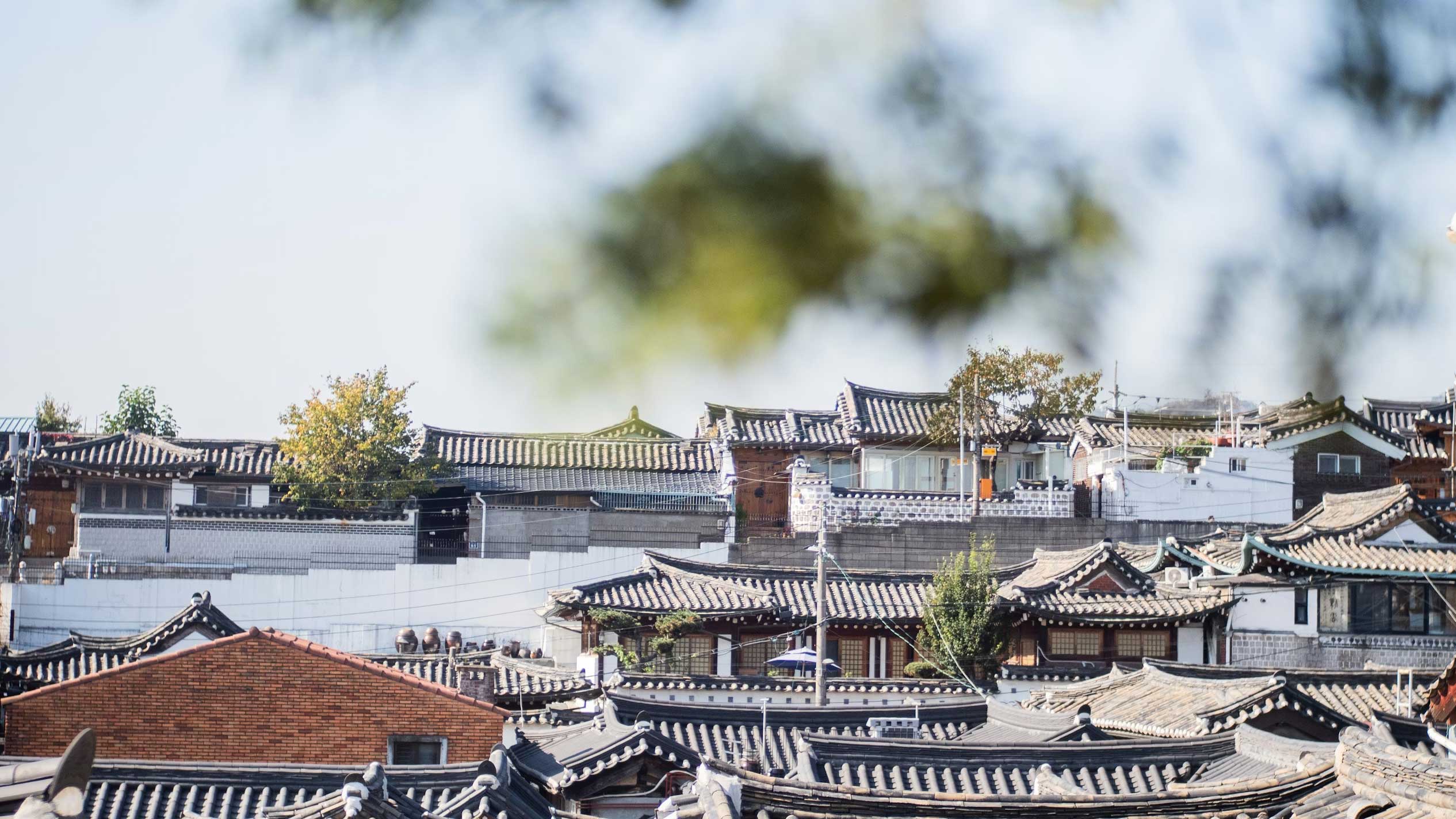
Seoul does not always reveal its age immediately. Glass and steel tend to occupy the horizon first. Only after walking a while — turning away from wider roads, letting the incline guide the pace — do the older forms begin to appear. Bukchon gathers itself along a slope, its houses leaning slightly into one another as though sharing the same breath.
The lanes feel narrower than expected. Stone underfoot, plaster walls warmed by afternoon light, wooden doors set back just enough to create shadow. Nothing announces importance. The roofs, tiled in deep charcoal, bend upward at their corners with a restraint that feels almost private. They seem less designed than settled.
You notice the repetition slowly. One curve, then another, then another again. It is not identical — the angles shift slightly, the tiles weather unevenly — but the pattern persists. Even in stillness there is movement, a suggestion of rain sliding downward, of seasons passing without spectacle.
Rain Held in Clay and Wood
Climbing higher through Bukchon, the city sounds thin out. Conversation becomes more distinct, footsteps more deliberate. The shingles catch light differently depending on the hour; sometimes matte, sometimes carrying a faint gloss after rain. They do not shine in a dramatic way. They hold light briefly, then let it go.
Later, travelling south on the KTX, the shift in landscape feels less like departure and more like a continuation of slope and line. The buildings loosen their grip on the skyline. Hills begin to fold around the tracks. The journey moves with an even pulse, neither hurried nor lingering, as if time has agreed to stretch quietly in both directions.
Through the window, fields pass in wide swaths of colour — muted greens, pale browns, water reflecting fragments of sky. Occasional towns appear, then dissolve again into terrain. The roofs in Bukchon had followed the incline of their hill; here, the countryside does the same. Nothing resists its placement. Structures adapt to ground rather than interrupting it.
In memory, the shingles remain less as objects and more as gesture — a soft curve repeated enough times to feel familiar without becoming fixed.
Gates That Narrow the Sky
Kyoto carries its history differently. The streets open into longer sightlines. Temples sit behind low walls, partially obscured by trees that seem older than the paths beside them. Movement slows almost without instruction.
Arriving via the Shinkansen trains, speed gives way to quiet in a manner that feels seamless rather than abrupt. The station empties gradually. Voices blend into background tone. Outside, the grid of the city stretches calmly, unforced.
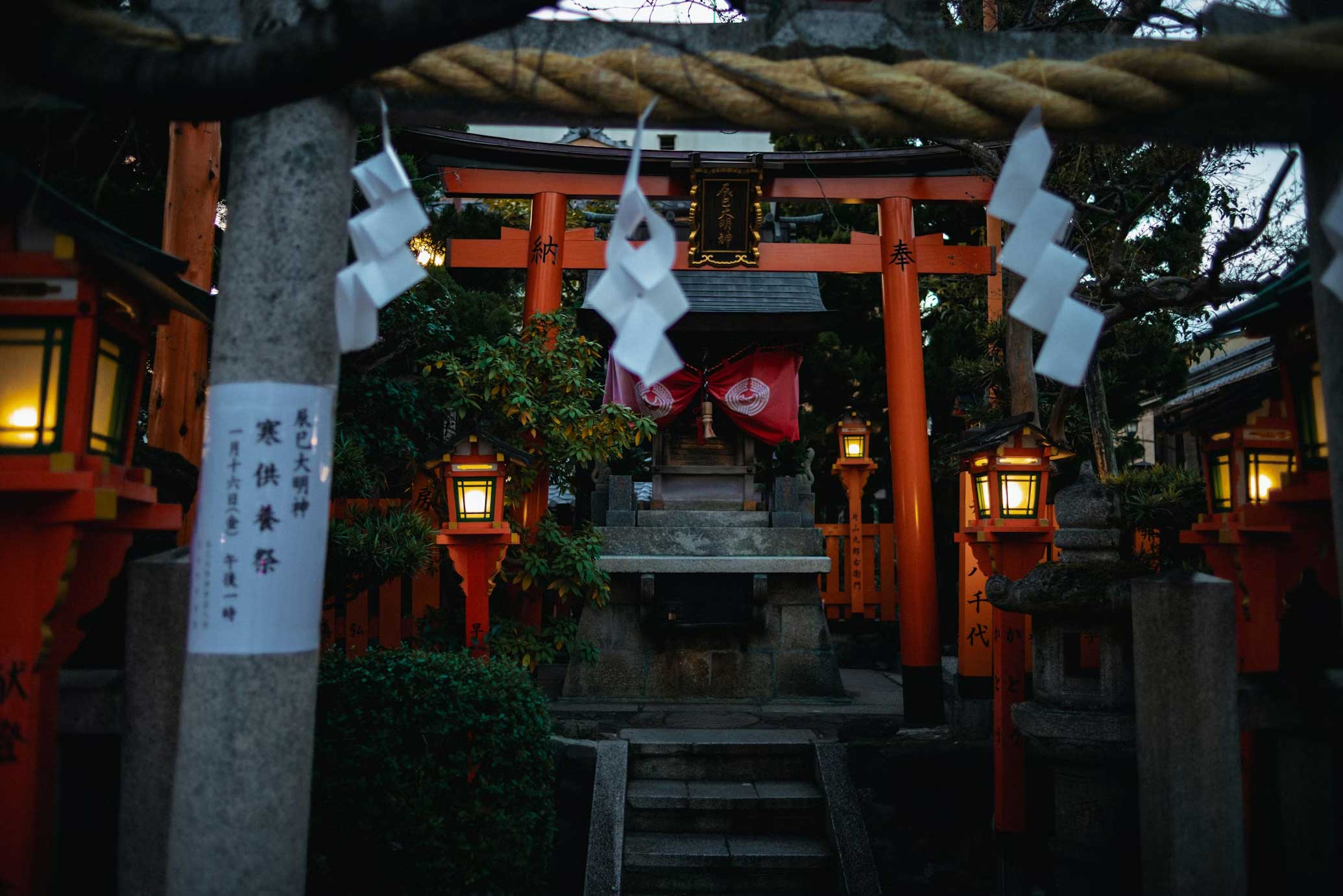
At Fushimi Inari, the first torii gates appear almost understated. A few vermilion frames marking the threshold, simple in form, neither ornate nor grand. Then the repetition begins. One gate follows another, then another again, until the path becomes a corridor of red and shadow. The sky narrows overhead. Light filters through in bands, shifting as clouds pass.
Walking upward, the gates feel less like objects and more like intervals. Each frame holds a moment of shade before releasing it. The paint shows signs of weather. Wood grain surfaces at the edges where colour has thinned. Moss gathers at the base, softening the geometry.
There is no final reveal waiting at the top. The path curves, opens briefly to forest, then closes again beneath another sequence of beams. The repetition becomes immersive, not overwhelming. It feels steady, almost meditative, though no one names it as such.
Lines That Continue Across Water
Bukchon’s tiled roofs and Kyoto’s torii share little in material, yet their lines echo in unexpected ways. Both trace the air without sealing it. Both define space while allowing it to remain porous. A courtyard in Seoul opens inward; a shrine path in Kyoto opens upward. The movement differs, but the restraint feels similar.
In Seoul, the hanok neighbourhood sits within sight of high-rise buildings, their glass surfaces catching the same sun that falls on clay tiles. In Kyoto, temple grounds withdraw slightly from surrounding streets, creating pockets where sound seems to disperse rather than gather. Neither place rejects what surrounds it. They simply fold older forms into newer rhythms.
Sometimes the resemblance appears in small details — the angle of a beam, the shadow beneath an eave, the way gravel shifts underfoot. Even the air seems to carry a comparable weight at dusk, when colour drains gently from surfaces and outlines soften.
After the Movement Has Settled
What remains later are not monuments but textures. The coolness of stone under palm. The faint scent of wood warmed through the day. The low hum of a train receding somewhere beyond view. Travel between these cities does not arrange itself into contrast. It feels more like a thread passing through similar patterns, tightening and loosening as it goes.
The roofs in Bukchon still curve in recollection, though the exact number of houses fades. The torii gates continue upward, though their endpoint grows indistinct. Shapes repeat, then blur. The memory does not conclude; it lingers at the edges, where clay, paint, and light settle back into quiet form.