

Belém Tower’s Limestone and the Granite Bridges of Porto:
Mapping Architectural Icons
Portugal rarely separates water from stone. The coastline folds into riverbanks, and architecture seems to grow from whatever material is closest at hand. In Lisbon, pale limestone gathers at the edge of the Tagus. In Porto, granite arches stretch across the Douro with heavier intent. The shift between them is not dramatic. It is textural.
Light behaves differently in each place.
Where the River Meets the Sea
Belém Tower stands slightly apart from the city’s rhythm, as if pausing at the edge of departure. Its limestone façade absorbs brightness in the morning and glows faintly by late afternoon. The carvings appear delicate at first glance — ropes in stone, balconies edged with ornament — but the structure itself feels compact, resistant.
The river moves slowly beside it. Ferries pass without urgency. From certain angles, the tower looks almost fragile against open sky, though its base suggests otherwise.
Later, the journey north begins quietly, and aboard the Alfa Pendular the coastline slips away in widening curves before giving way to inland fields. The transition does not feel like leaving one icon for another. It feels like adjusting the colour palette — pale beige yielding to darker tones, flat horizons tightening into hills.
Through the train window, industrial stretches interrupt briefly, then dissolve into farmland. Portugal does not exaggerate its distances.
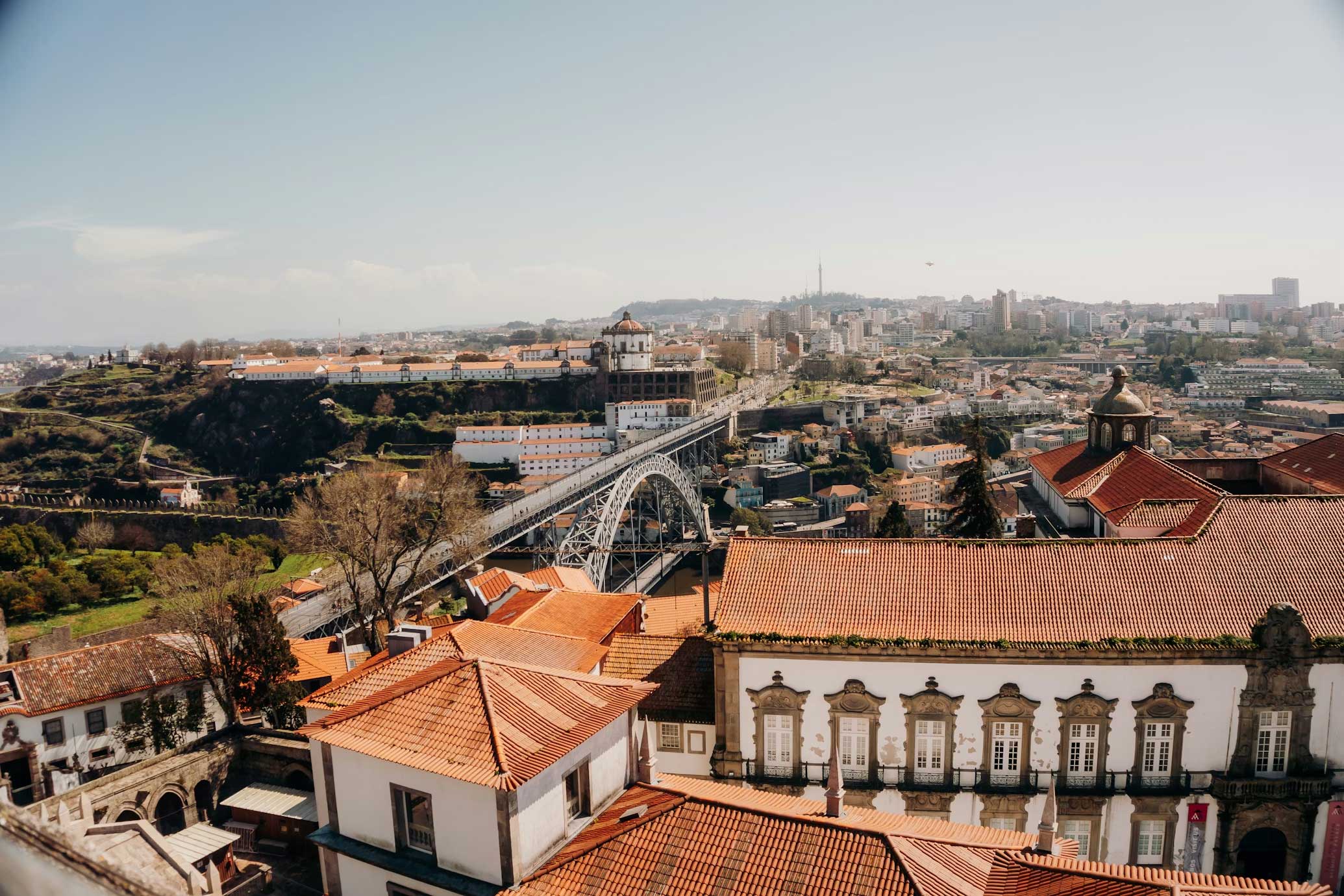
Stone That Carries Weight
The movement between Lisbon and Porto compresses architectural contrast into a single line of track. Yet the experience resists tidy comparison. In Lisbon, openness defines the tower’s surroundings. In Porto, compression defines the bridges’ context.
Fields seen from the train feel neutral — neither limestone nor granite, neither river mouth nor narrow gorge. They offer space between materials.
Light shifts across surfaces without asking which deserves attention. In Belém, ornament casts narrow shadows. In Porto, structural lines carve broader ones.
Between Brightness and Density
The desert corridor linking King Abdullah Economic City and Madinah does not dramatise the distance. It presents it in wide bands of light and muted colour. The rail line becomes a thin thread across a vast surface.
From the window, you begin to notice small variations — a cluster of shrubs resisting dryness, a patch of darker soil, a solitary structure standing at an angle against wind.
The train does not linger. It moves with consistency. The desert remains patient.
When Evening Changes the Surface
By dusk, Belém Tower softens. The limestone takes on warmer hues before fading toward grey. In Porto, granite darkens further, nearly merging with shadow as lamps illuminate the bridge framework above.
Neither monument insists on narrative. They remain where water meets land, shaped by geography rather than spectacle.
The train continues to run north and south. The river continues to move toward the sea. Limestone stands pale at the edge of departure. Granite holds firm above deep water.
And somewhere between brightness and weight, the landscape keeps rearranging light across stone without choosing which form should endure more visibly.
Where the River Decides
Rivers alter perception more than monuments do. Along the Tagus, the space around Belém feels open, almost exposed, as if the tower were positioned at the threshold of something unfinished. Along the Douro, space narrows. The bridges compress the view, directing the eye from one bank to the other in deliberate arcs. Water reflects differently in each place — broad and luminous in Lisbon, darker and more contained in Porto. The contrast does not feel staged. It feels geographic. The stone responds to what surrounds it: limestone brightens where the river widens; granite steadies where the valley tightens.
After the Line of Track
Long after the journey between them has ended, what returns is not a comparison but a sensation of surfaces under changing light. The pale edge of Belém at mid-morning. The heavier silhouette of Porto’s bridges at dusk. The fields in between, passing without insistence beyond the train window. Portugal’s architectural icons do not compete across distance. They remain fixed in their respective waters, shaped by tide and slope, while the rail line continues to connect them quietly — a thin movement threading brightness and weight without asking either to yield.